
What is North Indian cuisine? North Indian cuisine is a broad collection of food traditions from northern parts of India, known for wheat-based breads, lentils, dairy, vegetables, aromatic spices, tandoori cooking, rich curries and diverse regional flavours.
North Indian food is not a single style of cooking because the region includes several distinct culinary traditions. Punjabi, Mughlai, Awadhi, Kashmiri, Delhi and Rajasthani cuisines all contribute different dishes, ingredients and cooking techniques to the wider North Indian food landscape.
From butter chicken and dal makhani to naan, paneer tikka, chole, rajma and kebabs, famous North Indian dishes are enjoyed throughout India and have become particularly popular in restaurants serving Indian cuisine around the world.
North Indian cuisine refers to the diverse food traditions that developed across northern India, shaped by regional agriculture, climate, history, local ingredients and cultural influences. It includes vegetarian and non-vegetarian dishes prepared using grains, pulses, vegetables, dairy, meat, spices and herbs.
Traditional North Indian food commonly features wheat, rice, lentils, chickpeas, kidney beans, paneer, yoghurt, ghee and seasonal vegetables. Depending on the region and dish, cooking may involve roasting, grilling, slow cooking, frying, steaming or cooking in a tandoor.
The cuisine is particularly recognised for its variety of breads, aromatic gravies, tandoori preparations, lentil dishes and kebabs. However, North Indian cooking varies considerably between regions, so there is no single flavour profile that represents every dish.
North Indian food has several characteristics that help distinguish it from other regional Indian cuisines. These include the extensive use of wheat, lentils, dairy, aromatic spices, tandoor cooking and slow-cooked preparations.
Wheat is an important staple across many parts of North India, which explains the popularity of breads such as naan, roti, paratha, tandoori roti and kulcha.
These breads can be cooked in different ways and paired with dals, curries, vegetables, paneer preparations or meat dishes. Their texture and flavour also vary depending on the cooking method and ingredients.
Lentils and legumes are an important part of traditional North Indian food, providing protein, texture and flavour across everyday meals and special preparations.
Popular examples include dal makhani, dal tadka, rajma and chole. These dishes can range from simple everyday preparations to rich, slow-cooked recipes featuring aromatic spices and additional ingredients.
Dairy products play an important role in many North Indian dishes, particularly in cuisines where milk, yoghurt, paneer, butter and ghee are commonly used.
Paneer is especially popular in vegetarian North Indian cooking and appears in dishes such as paneer tikka, palak paneer, shahi paneer and kadai paneer. If you are interested in exploring more meat-free options in Goa, our guide to vegetarian food in Goa covers popular vegetarian dishes and dining options.
North Indian cooking uses a wide variety of spices and aromatics, including cumin, coriander, cardamom, cloves, cinnamon, turmeric, ginger, garlic and garam masala.
These ingredients contribute aroma, depth and complexity rather than simply making food hot. The amount and combination of spices varies significantly depending on the recipe, region and cooking style.
The tandoor is strongly associated with North Indian cooking and is traditionally used to cook breads, meats, paneer and vegetables at high temperatures.
Tandoori chicken, chicken tikka, paneer tikka, naan and tandoori roti are well-known examples. High-temperature cooking can create a distinctive roasted aroma, charred edges and smoky flavour.
North Indian cuisine includes several regional traditions rather than one standard cooking style. Each region has developed distinctive dishes based on its ingredients, history, climate and culinary influences.
Punjabi cuisine is one of the best-known regional food traditions associated with North India. It is particularly recognised for tandoor cooking, wheat-based breads, dairy products, lentils and hearty vegetarian and non-vegetarian dishes.
Popular Punjabi dishes include dal makhani, chole, paneer preparations, tandoori chicken, butter chicken, kulcha and various stuffed parathas. For a deeper look at the cuisine, read our guide to the best Punjabi food in Goa.
Mughlai cuisine developed through historical influences from the Mughal period and became an important part of North Indian culinary traditions.
It is associated with dishes such as kebabs, korma, biryani and rich meat preparations, often featuring aromatic spices, nuts, dried fruits, yoghurt and carefully developed gravies.
Delhi has developed a diverse food culture influenced by different communities and culinary traditions from across northern India.
The city’s food culture is associated with dishes and styles including chole bhature, parathas, kebabs, chaat and butter chicken, while its restaurants offer many other North Indian preparations.
Awadhi cuisine is associated particularly with Lucknow and is known for refined cooking techniques, slow preparation, aromatic spices, kebabs and rice dishes.
Dum cooking, in which ingredients are cooked slowly in a covered vessel, is an important technique associated with several Awadhi preparations.
Kashmiri cuisine developed in the Himalayan region and has its own distinctive ingredients, cooking traditions and flavour combinations.
Well-known preparations include rogan josh and yakhni, while rice traditionally plays an important role in many Kashmiri meals.
Rajasthani cuisine developed in the arid environment of Rajasthan, where traditional cooking was influenced by climate, water availability and the ingredients that were practical to store.
Popular dishes include dal baati churma, gatte ki sabzi and ker sangri, demonstrating how different North Indian regions have developed their own distinctive food traditions.
Some famous North Indian dishes have become popular far beyond the region itself. These dishes include vegetarian curries, lentils, tandoori preparations, kebabs, breads and rice-based meals.
For travellers visiting Goa specifically to explore North Indian flavours, our guide to the best North Indian restaurant in Goa provides a more detailed look at North Indian dining and popular dishes available at Highway K’tchen.
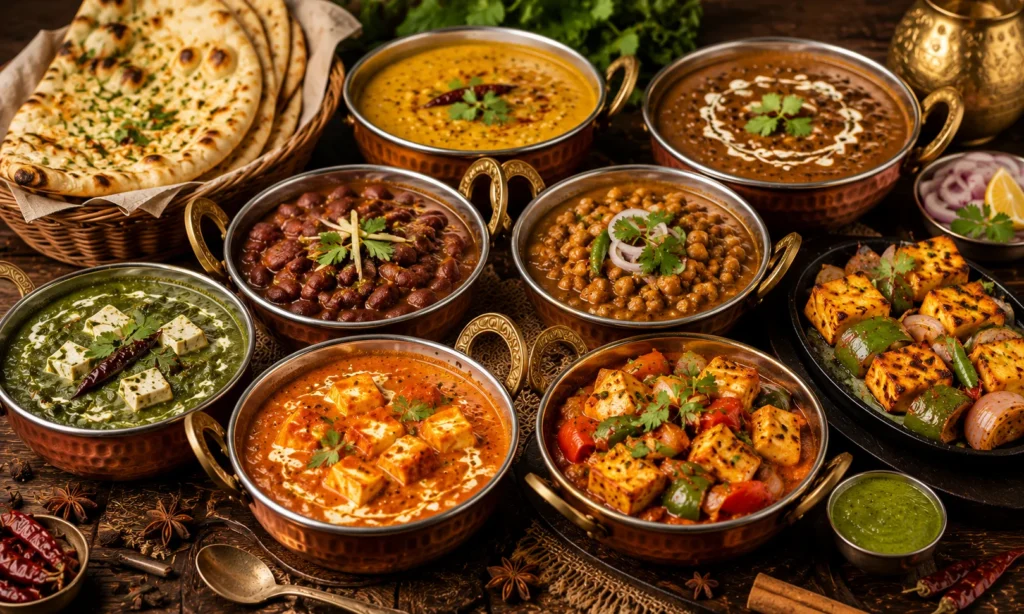
North Indian vegetarian food includes a wide range of dishes based on paneer, lentils, chickpeas, vegetables and grains. Many of these preparations can form complete meals when combined with breads or rice. Popular examples include dal makhani, dal tadka, rajma, chole, palak paneer, shahi paneer, kadai paneer and paneer tikka.

North Indian non-vegetarian cooking includes a wide variety of chicken, lamb and other meat preparations, with tandoor cooking, slow-cooked gravies and kebabs playing important roles. Butter chicken, tandoori chicken, chicken tikka, rogan josh, kebabs and several regional meat curries are among the most widely recognised North Indian dishes.
Bread is an important part of many North Indian meals, particularly in regions where wheat is a major staple. Naan, butter naan, roti, tandoori roti, paratha and kulcha are commonly paired with curries, dals, vegetables and grilled preparations.
Rice is also an important part of North Indian cuisine, particularly in dishes influenced by regional and historical cooking traditions. Biryani, pulao and jeera rice are popular examples. Rice can be served alongside curries, dals and kebabs or enjoyed as the main component of a meal.
North Indian cooking uses ingredients that vary considerably by region, but several staples appear repeatedly across different traditional preparations.
Wheat and rice are two important staples in North Indian cuisine. Wheat is commonly used for breads, while rice appears in biryani, pulao and everyday meals.
Lentils, chickpeas and kidney beans provide the foundation for many vegetarian North Indian dishes. Dal makhani, dal tadka, chole and rajma are familiar examples that demonstrate how pulses can be transformed into dishes with very different textures and flavours.
North Indian cooking uses vegetables such as potatoes, cauliflower, spinach, peas, onions, tomatoes, mushrooms and seasonal produce across curries, dry preparations and tandoori dishes.
Vegetarian cooking can therefore be highly varied, ranging from simple vegetable preparations to elaborate paneer-based curries and grilled dishes.
Milk-based ingredients including paneer, yoghurt, butter, cream and ghee appear in many North Indian preparations. Their use can provide richness, body or texture to dishes, although not every North Indian recipe contains dairy.
Common spices and aromatics include cumin, coriander, turmeric, cardamom, cloves, cinnamon, ginger, garlic and garam masala. Different combinations create distinctive flavour profiles, and traditional North Indian cooking often involves adding spices at different stages to develop aroma and depth.
North Indian cooking includes several techniques, and the method used depends on the ingredients, region and specific dish.
A tandoor is a high-temperature cooking oven traditionally associated with North Indian cuisine. It can be used to cook breads, meats, paneer and vegetables. Tandoor cooking gives food a distinctive roasted character and can create browned or charred surfaces while cooking ingredients quickly at high temperatures.
Slow cooking is used for many dals, curries and meat preparations where extended cooking allows ingredients and spices to develop deeper flavours. Dal makhani is one familiar example of a dish traditionally associated with slow cooking, although preparation methods can differ between households and restaurants.
Many North Indian curries begin by cooking ingredients such as onions, tomatoes, ginger, garlic and spices together until the mixture develops a deeper flavour and cohesive texture. This process helps create the base of many gravies and allows spices and aromatics to become integrated with the other ingredients.
Grilling and roasting are particularly important for tandoori dishes, kebabs, paneer tikka and several vegetable preparations. High heat can produce a roasted exterior while helping retain the texture and moisture of ingredients, depending on the preparation.
Dum cooking involves preparing food slowly in a covered vessel, allowing steam and heat to remain inside while flavours develop gradually. The technique is strongly associated with several Awadhi and Mughlai-influenced dishes, including certain rice preparations and slow-cooked meat dishes.
North Indian food does not have one universal flavour because regional cuisines and individual dishes can taste very different. Many dishes combine aromatic spices, savoury ingredients, fresh herbs, tangy elements and roasted flavours. Some preparations are rich and creamy, while others are lighter, simpler and more focused on lentils, vegetables or grilled ingredients.
Tandoori dishes can have roasted and smoky notes, while tomato-based curries may offer acidity and richness. Lentil dishes can be earthy and comforting, whereas chaat and other snacks often combine sweet, sour, spicy and crunchy elements.
No, North Indian food is not always spicy. The amount of chilli and overall heat depends on the individual dish, regional tradition and cooking method.
A dish can contain several aromatic spices without being particularly hot. For example, naan, dal, many paneer dishes and several mild curries can be prepared with balanced seasoning and relatively low chilli heat.
If you prefer mild food, you can usually ask the restaurant to adjust the chilli level where the recipe allows. However, certain traditional preparations may have a naturally stronger spice profile.
North Indian and South Indian cuisines are both broad categories containing numerous regional food traditions, but they commonly differ in ingredients, staples, cooking techniques and flavour combinations.
North Indian cuisine is strongly associated with wheat-based breads, tandoori cooking, paneer, lentils, rich curries and aromatic spice blends, although rice and lighter preparations are also important.
South Indian cuisine commonly features rice, lentils, fermented batters, coconut, curry leaves and ingredients such as tamarind, with dishes including dosa, idli, sambar, rasam and appam.
These differences are general rather than absolute because Indian cuisines overlap considerably and many ingredients and cooking techniques are shared across regions.
Punjabi cuisine is one regional tradition within the broader category of North Indian cuisine. North Indian cuisine covers a much larger geographical and culinary area.
Punjabi food is particularly associated with tandoor cooking, wheat-based breads, dairy products, lentils, paneer, chickpeas and hearty preparations.
North Indian cuisine also includes food traditions from regions such as Delhi, Uttar Pradesh, Rajasthan, Kashmir and other northern areas, each contributing different ingredients, dishes and cooking techniques.
If you specifically want to explore Punjabi cuisine in Goa, you can also read our guide to the best Punjabi restaurant in Goa.
No. Punjabi food and North Indian food are closely related, but they are not interchangeable terms.
Punjabi cuisine represents the food traditions of Punjab and has its own distinctive dishes and cooking styles. North Indian cuisine is a broader category that includes Punjabi food along with several other regional traditions.
This is why a restaurant can specialise in North Indian cuisine while also highlighting Punjabi dishes as an important part of its menu.
First-time diners can start with a combination of familiar dishes representing different parts of North Indian cooking rather than ordering several similar curries.
Paneer tikka, dal makhani, kadai paneer, chole and naan provide a useful introduction to grilled, lentil-based, curry and bread preparations.
If vegetarian dining is your main priority while travelling through Goa, our guide to the best vegetarian restaurant in Goa can help you explore more vegetarian-friendly options.
Tandoori chicken, chicken tikka, butter chicken and kebabs provide a combination of tandoor-cooked and curry-based North Indian flavours.
A simple North Indian meal can include a starter, one or two main dishes, a dal or vegetable preparation, naan or another bread, rice and an appropriate accompaniment.
A North Indian meal does not have to follow a strict formula, but ordering a combination of different preparations can help you experience a wider range of flavours and textures.
For a group, you can begin with shared starters such as paneer tikka, chicken tikka or kebabs, followed by curries, dal, vegetables and breads or rice.
For a smaller meal, one curry or dal with naan, roti or rice can provide a complete and satisfying combination without ordering too many dishes.
Goa is widely known for its coastal food traditions, but visitors can also find restaurants serving North Indian cuisine, Punjabi food, South Indian dishes and other regional Indian cuisines.
North Indian food can be particularly appealing to travellers who want familiar dishes such as naan, paneer, dal, tandoori preparations and Indian curries during their Goa holiday.
For vegetarian travellers and families with different food preferences, restaurants offering a combination of vegetarian and non-vegetarian North Indian dishes can also provide greater flexibility.
If you are travelling with family, our guide to the best family restaurant in Goa covers dining considerations for families and groups.
North Indian restaurants can be found in different parts of Goa, including areas around Dabolim, Vasco, Panjim, Margao and other popular travel destinations.
For travellers staying around Dabolim or travelling through Goa Airport, Highway K’tchen offers North Indian and Punjabi-inspired food along with vegetarian and non-vegetarian choices.
The restaurant is located at Shop No-5A, Umiya Quatro-D, Green Valley, Dabolim, Goa 403801, making it a convenient option for travellers looking for Indian food around the Dabolim area.
Highway K’tchen’s menu includes North Indian and Punjabi-inspired preparations, with options such as dal, mushroom dishes, Indian breads, tandoori preparations and vegetarian snacks.
If you are specifically looking for restaurants around the airport, explore our detailed guide to restaurants near Dabolim Airport Goa.
For a detailed restaurant guide, explore our Best North Indian Restaurant in Goa article.
You can also explore our guide to Best Punjabi Food in Goa if Punjabi cuisine is your primary preference.
North Indian cuisine is a broad collection of regional food traditions from northern India, featuring dishes made with wheat, rice, lentils, vegetables, dairy, meat and aromatic spices. Punjabi, Mughlai, Awadhi, Kashmiri, Delhi and Rajasthani food traditions are among the regional influences associated with North Indian cuisine.
North India is famous for dishes such as butter chicken, dal makhani, tandoori chicken, chicken tikka, paneer tikka, chole bhature, naan, kulcha, kebabs, biryani and several regional vegetarian preparations.
Five widely recognised North Indian dishes are butter chicken, dal makhani, tandoori chicken, paneer tikka and chole bhature. These dishes represent different aspects of North Indian cooking, including tandoor preparation, lentils, paneer, meat and wheat-based foods.
North Indian food is not always spicy. Some dishes are mild and aromatic, while others contain more chilli or stronger spice blends. The heat level depends on the specific recipe, regional tradition and preparation method.
Yes. Punjabi cuisine is generally considered one of the major regional food traditions within North Indian cuisine. However, North Indian cuisine is broader and includes several other regional culinary traditions.
Common ingredients include wheat, rice, lentils, chickpeas, kidney beans, paneer, yoghurt, vegetables, meat, onions, tomatoes, ginger, garlic and aromatic spices such as cumin, coriander, cardamom and garam masala.
Common North Indian breads include naan, roti, tandoori roti, paratha and kulcha. The choice depends on the dish, region and individual preference, with different breads offering different textures and flavours.
Popular North Indian vegetarian foods include dal makhani, paneer tikka, palak paneer, kadai paneer, chole, rajma and various vegetable curries. The most popular choice depends on individual taste and the type of meal being ordered.
North Indian cuisine commonly features wheat-based breads, tandoori dishes, paneer, lentils and aromatic gravies, while South Indian cuisines commonly feature rice, fermented batters, coconut, curry leaves and tamarind. Both regions contain significant culinary diversity.
Tandoori food is prepared using a tandoor, a high-temperature oven traditionally associated with Indian cooking. Tandoori chicken, chicken tikka, paneer tikka, naan and tandoori roti are well-known examples.
North Indian food is available across Goa, including the Dabolim area. Highway K’tchen in Dabolim serves North Indian and Punjabi-inspired food with vegetarian and non-vegetarian options for travellers, families and groups.
North Indian cuisine is not a single style of food but a broad collection of regional traditions shaped by geography, agriculture, history, local ingredients and different cooking techniques.
Traditional North Indian food includes vegetarian and non-vegetarian dishes, with wheat, rice, lentils, vegetables, dairy, meat, aromatic spices and tandoor cooking appearing across different regional preparations.
Punjabi cuisine is an important part of the wider North Indian food tradition, while Mughlai, Awadhi, Kashmiri, Delhi and Rajasthani cuisines demonstrate the diversity found across northern India.
For travellers visiting Goa, North Indian cuisine offers familiar options such as naan, paneer, dal, tandoori dishes, curries and kebabs alongside the state’s distinctive local food traditions.
If you are in Dabolim and looking for North Indian or Punjabi-inspired food, Highway K’tchen offers a range of vegetarian and non-vegetarian dishes in a convenient location near Goa Airport.